
For years, companies romanticized innovation as an engine for growth and differentiation, misinterpreting the concept and assuming that by launching more and more products, the company would grow its sales in the same proportion.
Those of us who come from operations, on the other hand, feel that with the launch of a new product, the references to manage increase, we have more raw materials to manage, more reference changes in the plant, possibly a decrease in batch sizes of cannibalized products, and an increase in the complexity of operations scheduling.
If your business is in a segment with high obsolescence (technology, fashion, food), the loss of inventory value will grow exponentially as the size of the portfolio increases.
The concept of an efficient portfolio is not new; it began to be discussed in 1993 at Walmart as a component within the Efficient Consumer Response (ECR) model. The elements to consider within ECR that are still valid to date are:
- Efficient assortment of stores (efficient portfolio)
- Efficient Replenishment (continuous replenishment)
- Efficient Promotions
- Efficient Product Launch
We suggest you take a look at this article by Jose Ivan Granada https://zonalogistica.com/el-ecr-elemento-super-importante-para-la-eficiencia-operacional-de-las-cadenas-de-valor/
Currently, any mature Sales and Operations Planning (SOP or IBP) process should have within its cycle a process that makes a disciplined review of the portfolio.
Let’s understand that today more than ever, with the increase in the cost of capital and the decrease in consumption due to inflation, we must give top priority to having an efficient portfolio that allows for an adequate balance between sales, costs, and investment.
Where to begin
Start by repeating the phrase: having more references in the portfolio does not necessarily mean more sales.
The recommended activities for the current portfolio are:
- Perform the reliable ABC – XYZ matrix to identify products with low volume and/or high variability – in this video you can find instructions on how to do it https://www.youtube.com/watch?v=-GoYI746kEY
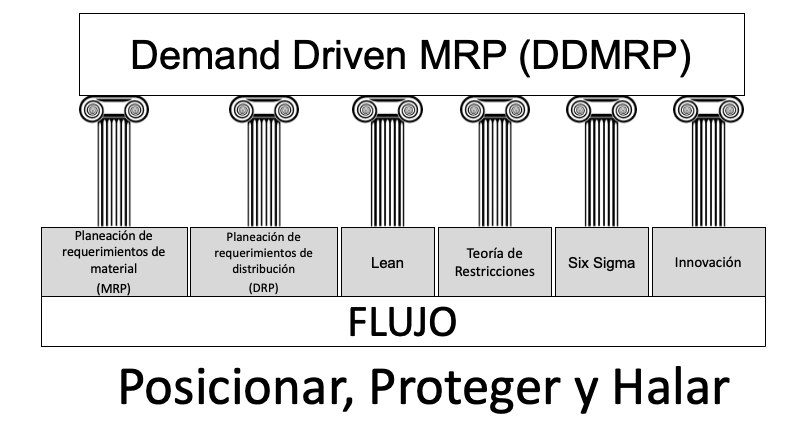
- Calculate the flow index of the products – Demand Driven calculation in which the Green Zone (Quantity to Order / Average Daily Consumption) is taken, and you can find the fastest and slowest products in their replenishment frequency.
- In retail, compare the dress or load of the store per reference against its sales per day to find the capital requirement to be able to make a sale (recommendation: take sales per day and not per month; this will make it more sensitive to the reality of the sale).
- Analyze the products that are constantly being discounted, destroyed, or reprocessed.
- Analyze products with similar uses or customers that can be combined or are redundant.
- Be ruthless with products that are stillborn; a product that is stillborn is unlikely to revive.
- Detach yourself from the products and do not make decisions based on what was invested in their development. https://es.wikipedia.org/wiki/Costo_hundido
- Make decisions with data and less with the heart. In this part, descriptive analytics can help you do analysis very quickly and continuously. This process cannot be a one-time event; it should be a monthly or maximum quarterly exercise.
For new products, practice Rational Innovation.
- Treat innovations as the purchase of an asset; normally, when companies are going to buy a machine, acquire an asset, or build, they analyze the expected return on it; sometimes, the same does not happen with the launch of new products.
- The indicators for new products should be associated with the level of sales of the same and not with the number of releases.
- Be aware that every new product affects the operation, both in its efficiency and in its inventories; estimate the impact of these components, not only the expected sales.
- Carry out, as far as possible, tests of your products on a small scale to determine future demand and see if the expected demand is better than existing products.
- Maintain a flow of new product releases connected to the speed of sale. Measure the expected sales speed per product family
- Be disciplined in the management of your innovation pipeline. Respect each of the stages (Stage Gate) with discipline https://www2.stage-gate.la/wp-content/uploads/2018/06/wp10english.pdf
- Have “buffers” or inventories of designs and release them according to changing market conditions.
These are some of the recommendations we make from WA Solutions SAS. If you want to know more about our products and what our clients have achieved with our support, contact us and visit our WEB page.
We leave you the following links where you can expand on some of these concepts: https://hbr.org/2011/04/why-most-product-launches-fail